-
Hotel, Tea House, Tent
-
Car, Jeep, flights
-
All meals during the trek
-
2-15
-
5,545 M
-
Autumn & Spring
Overview
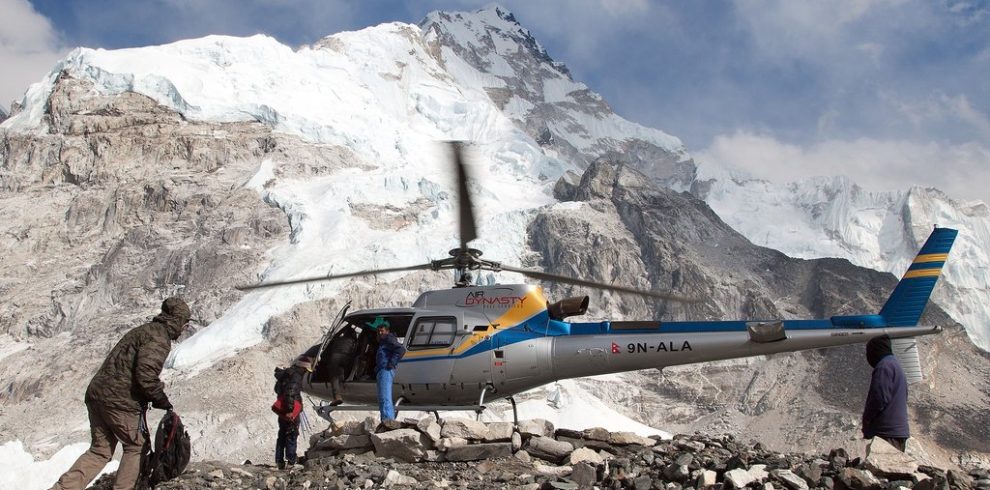
The Everest Base Camp Gokyo Lakes Heli Trek is a premier 15-day adventure that combines the most iconic landmarks of the Khumbu region with the luxury and efficiency of helicopter travel. This “challenging” grade trek is designed for those who want to experience the dramatic landscapes of both the Everest and Gokyo valleys, including a crossing of the formidable Cho La Pass, while skipping the long trek back to Lukla.
This itinerary offers a complete circuit of the Everest region. You’ll stand at the foot of the world’s highest peak at Everest Base Camp, witness the emerald-green brilliance of the Gokyo Lakes, and conquer two of the best viewpoints in the Himalayas: Kalapathar and Gokyo Ri. The journey begins and ends with spectacular helicopter flights, providing unparalleled aerial views of the massif and ensuring you spend more time in the heart of the mountains.
Itinerary
Upon your arrival at Tribhuvan International Airport, a representative will welcome you and transfer you to your hotel. The afternoon is yours to rest or explore the vibrant streets of Thamel. In the evening, you will gather for a detailed trek briefing where your guide will review your gear and provide a final run-through of the mountain safety protocols.
Meals: Welcome Dinner Accommodation: Hotel Duration: N/A Max Elevation: 1,350m/4,429ft
Bypassing the long road journey to Ramechhap, you board a direct helicopter for a 40-minute flight to the mountain airstrip of Lukla. After meeting your trekking crew, the journey officially begins with a descent into the Dudh Koshi Valley. The trail winds through stone-walled pastures and small Sherpa settlements until you reach the riverside village of Phakding.
Meals: Breakfast, Lunch, Dinner Accommodation: Standard Lodge Duration: 55 min flight / 4 hrs trek Max Elevation: 2,800m/9,186ft
Following the banks of the turquoise Dudh Koshi River, you cross several high suspension bridges, including the famous Hillary Bridge. After entering Sagarmatha National Park at Monjo, the trail climbs steeply through pine forests. As you reach the horseshoe-shaped town of Namche Bazaar, you are rewarded with your first glimpses of Mt. Everest and Thamserku.
Meals: Breakfast, Lunch, Dinner Accommodation: Standard Lodge Duration: 6-7 hrs Max Elevation: 3,440m/11,286ft
To allow your body to adjust to the thinning air, you spend a second night in Namche. A morning hike takes you up to the Hotel Everest View, one of the highest hotels in the world, offering a breathtaking panoramic vista of Everest, Lhotse, and Ama Dablam. The rest of the day can be spent visiting the local Sherpa museum or enjoying a coffee at a high-altitude bakery.
Meals: Breakfast, Lunch, Dinner Accommodation: Standard Lodge Duration: 4-5 hrs Max Elevation: 3,880m/12,730ft
The trail follows a spectacular contour with Ama Dablam dominating the skyline. After a descent to the river for lunch, a steady climb through rhododendron forests brings you to Tengboche. Here, you visit the region's largest monastery and witness the evening chanting before descending a short distance to the quieter, forest-fringed village of Deboche.
Meals: Breakfast, Lunch, Dinner Accommodation: Standard Lodge Duration: 5-6 hrs Max Elevation: 3,860m/12,664ft
Passing through the ancient mani walls of Pangboche, the trees begin to disappear as you enter the alpine zone. You cross the Lobuche Khola and climb into the Imja Valley. The village of Dingboche is unique for its stone-walled fields, which protect crops from the harsh mountain winds, and offers a stunning view of Island Peak and Lhotse.
Meals: Breakfast, Lunch, Dinner Accommodation: Standard Lodge Duration: 5-6 hrs Max Elevation: 4,410m/14,468ft
This second rest day is essential before pushing toward the 5,000m mark. You take an acclimatization hike up toward Nangkartshang Peak. From this vantage point, you can look directly across at the world’s fifth-highest mountain, Makalu, and the towering south face of Lhotse. The afternoon is spent resting and hydrating in the lodge.
Meals: Breakfast, Lunch, Dinner Accommodation: Standard Lodge Duration: 4-5 hrs Max Elevation: 5,100m/16,732ft
The trail ascends the lateral moraine of the Khumbu Glacier, providing a rugged and lunar-like landscape. You pass through Thokla, where a series of poignant stone monuments commemorate climbers who lost their lives on Everest. The air becomes significantly thinner as you arrive at the small settlement of Lobuche, tucked under the shadow of the Lobuche East peak.
Meals: Breakfast, Lunch, Dinner Accommodation: Standard Lodge Duration: 5-6 hrs Max Elevation: 4,910m/16,108ft
A long and momentous day begins with a trek over rocky moraine to Gorak Shep, the final outpost. After a quick lunch, you push on to the legendary Everest Base Camp. Standing on the edge of the Khumbu Icefall, you soak in the atmosphere of the world's most famous base camp before retracing your steps to Gorak Shep for the night.
Meals: Breakfast, Lunch, Dinner Accommodation: Standard Lodge Duration: 7-8 hrs Max Elevation: 5,364m/17,598ft
You wake before dawn for the steep climb up Kalapathar. From the summit, you witness the sun rising behind Mt. Everest, casting a golden glow over the entire Khumbu massif. After descending to Gorak Shep for breakfast, you head away from the main trail toward the quiet village of Dzongla, situated at the base of the Cho La Pass.
Meals: Breakfast, Lunch, Dinner Accommodation: Standard Lodge Duration: 7-8 hrs Max Elevation: 5,545m/18,192ft
This is the most physically demanding day of the circuit. You navigate a steep, rocky ascent and cross a small, non-technical glacier at the top of the Cho La Pass. The views of Ama Dablam from the top are unparalleled. A steep descent on the other side brings you to the small settlement of Thagnak, marking your entry into the Gokyo Valley.
Meals: Breakfast, Lunch, Dinner Accommodation: Standard Lodge Duration: 8-9 hrs Max Elevation: 5,420m/17,782ft
The trail crosses the Ngozumpa Glacier, the longest glacier in the Himalayas. Emerging on the other side, you encounter the first of the sacred Gokyo Lakes. The village of Gokyo sits on the shores of the third lake (Dudh Pokhari), where the vibrant turquoise water creates a striking contrast against the surrounding white peaks.
Meals: Breakfast, Lunch, Dinner Accommodation: Standard Lodge Duration: 3-4 hrs Max Elevation: 4,790m/15,715ft
An early climb of Gokyo Ri provides what many consider the best view in Nepal. From the top, you can see four 8,000m giants: Everest, Lhotse, Makalu, and Cho Oyu. In the afternoon, you can explore the fourth and fifth lakes, which offer even closer views of Everest’s north face and the massive Ngozumpa Glacier.
Meals: Breakfast, Lunch, Dinner Accommodation: Standard Lodge Duration: 4-5 hrs Max Elevation: 5,357m/17,575ft
Instead of trekking back down for four days, you board a helicopter directly from the shores of the Gokyo Lakes. The flight provides a final, breathtaking aerial tour of the mountains and valleys you have spent the last two weeks exploring. Upon landing in Kathmandu, you are transferred to your hotel for a final farewell dinner.
Meals: Breakfast, Farewell Dinner
Accommodation: Hotel Duration: 1 hr flight
Max Elevation: 1,350m/4,429ft
After breakfast, your journey concludes. You are transferred to the airport via private vehicle in time for your international flight home, carrying with you the memories of a complete circuit through the heart of the Himalayas.
Meals: Breakfast
Accommodation: N/A
Duration: 2 hrs drive
Max Elevation: 1,350m/4,429ft
Cost
The Cost Includes
- Helicopter Flights: Direct helicopter transfers (Kathmandu – Lukla and Gokyo – Kathmandu).
- Accommodation: Boutique hotels in Kathmandu and quality mountain lodges during the trek.
- Safety Gear: Pulse oximeters, medical kits, and supplementary oxygen for emergency use.
- All Meals: Full board (Breakfast, Lunch, Dinner) during the trek with an "Open Menu" choice.
- Staff: Experienced, medically trained lead guide and professional porters.
The Cost Excludes
- International airfare and Nepal entry visa.
- Travel insurance (covering medical and emergency evacuation).
- Personal expenses like laundry, bar bills, and phone calls.
- Tips for guides, drivers, and lodge staff.
Check List
The gear listed below is recommended for this kind of trips. We encourage you to get all equipment listed below for the trip and kindly ensure you check and try every equipment. You can also buy or hire the same in Kathmandu as they are available in the many trekking shops from branded to local manufacturers in Kathmandu.
Head gears:
- Sunhat X 1
- Warm hat (should cover head & ear comfortably) X 1
- Buffs X 2
- Sunglasses (High-quality, UV-blocking sunglasses with good all-around protection) X 1
- Headlamp with spare batteries (200-300 lumens output) X 1
Upper Body:
- Thermal or fleece base layer top X 2
- Trekking shirts/t-shirts (Breathable and quick-dry materials) – full sleeve x 2 and short sleeve x 2
- Mid-Layer Jacket X 2 (Lightweight downs are good as well)
- Soft-shell jacket X 1 (Water and Wind Resistant)
- Hardshell jacket with a hood X 1 (Fully waterproof shell jacket, must fit comfortably over mid layers)
- Insulated Down Jacket X 1 (provided by us at request)
Lower Body:
- Thermal or fleece base layer bottom X 2
- Trekking trousers/pants X 3
- Hardshell pants X 1 for climbing days (Non-insulated and waterproof)
- Insulated down pant (optional) X 1
Underwear:
- 4 pairs of synthetic or wool fabrics only
Hand Wear:
- Liner Gloves X 1
- Midweight gloves X 1
- Expedition Down Mittens (Leather Palm) X 1
Foot Wear:
- Waterproof Hiking Boots (Preferably full to protect/support your ankle) X 1
- Double Layer Mountaineering Boot X 1
- Hiking socks X 4 pairs medium to heavy (synthetic and wool)
- Summit socks X 2
- Liner socks X 2
- Gaiter X 1 Pair
- Flip flop or Sneaker (To wear at teahouses and in city)
- Down booties (Optional)
Climbing Gears:
- Helmet
- Ice Axe
- Crampons
- Harness
- Carabiners (2 X Screw Gate and 2 X Snap Gate )
- Belay Device X 1
- Ascender/Jumar (Large Handle)
- Prussik Cord
- Safety Cord (2 m length)
Gears / Personal equipment:
- Daypack 40-45 liters (For both trekking and climbing)
- Duffel bag (provided by us at request)
- Down Sleeping bag (-20 C rated) with compression sack (provided by us at request)
- One litre capacity water bottle X 2 (Nalgene)
- Insulated Cover for Water bottle X 1
- Trekking poles
- Camera with charger or spare batteries
- Personal snacks, comfort foods, energy bars and gels
- A laundry bag to keep the dirty clothes
- Padlock (Optional)
- Earplugs (Recommended for light sleeper)
- Large plastic bags to keep the clothes dry
- Extra clothes to wear in Kathmandu when you come back from trek.
Toiletries and hygiene
- Quick drying towel
- Small face towel
- Toothbrush &Toothpaste
- Face mask
- Water treatment tools
- Soap and Shampoo (Smaller bottle)
- Face and body moisturizer
- Sunscreen SPF50+ and Lip balm SPF 30+
- Hand sanitiser/Antiseptic wipes
- Hygiene products
- Basic first aid kit
Documents:
- Passport with validity of 6 months.
- Credit cards in case of emergencies
- Travel Insurance
- Flight tickets
FAQs
Flying from Gokyo saves you a repetitive 4-day walk back down the valley. It also provides an aerial perspective of the Cho La Pass and the lakes you’ve just explored.
It is physically demanding but not technically “dangerous” for fit trekkers. We monitor snow conditions daily, and our guides carry traction gear (crampons) if the glacier is icy.
Unlike fixed-meal treks, we allow you to order whatever you like from the lodge menus (e.g., yak steaks, pizza, or traditional dal bhat) to keep your energy high.
Connectivity is surprisingly good in Namche and Lukla. However, at higher altitudes like Gorak Shep or Gokyo, you will likely need to rely on paid Wi-Fi cards.
Our itinerary includes two dedicated acclimatization stops (Namche and Dingboche). Our guides also carry pulse oximeters to check your oxygen saturation levels twice daily.