-
Hotel, Tea House, Tent
-
Car, Jeep, Flight
-
All meals during the trek
-
2-15
-
6,467 M
-
Autumn & Spring
Overview
The Mera Peak climb is a non-technical but physically demanding trek to the highest trekking peak in Nepal, standing at 6,467 meters (21,193 feet). While the slopes are relatively easy, typically not exceeding 40 degrees, the altitude, cold temperatures, and long duration make the climb challenging. No prior climbing experience is required, but a high level of physical fitness is essential. Previous experience with high-altitude treks is a significant advantage. The climb is considered an ideal first-time mountaineering adventure, as it provides a thrilling experience without the technical difficulty of peaks like Island Peak or Lobuche Peak.
The trek offers a variety of scenery, including lush jungles, rocky ridges, and snowy terrain. Along the way, you’ll encounter popular landmarks like Lukla, the Hinku Valley, and the villages of Poiyan, Pangoma, and Khare. There are also a few monasteries to explore. The itinerary is designed to allow for proper acclimatization, with a steady pace over a longer route and extra days for rest and contingency. A climbing course is provided at the base camp, where a guide will teach you how to use the equipment and prepare you for the ascent. The itinerary also includes an overnight stay at Mera Peak Base Camp before moving to the High Camp, which helps with acclimatization and increases the chances of a successful summit.
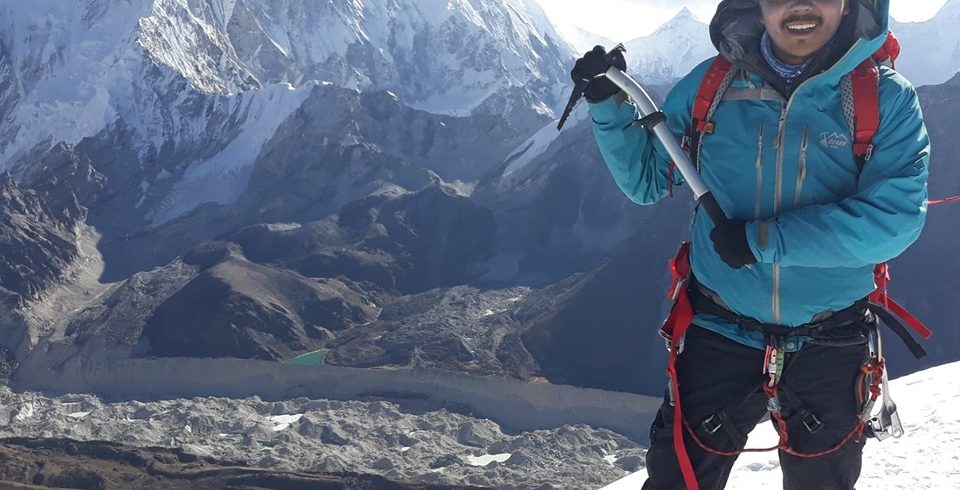
From the summit of Mera Peak, you will be rewarded with stunning panoramic views of five of the world’s 8,000-meter peaks: Everest, Lhotse, Kanchenjunga, Makalu, and Cho Oyu. The climb will take you to the Mera Peak Central summit, which is 6,461 meters (21,193 feet) high. A strong will, teamwork, and a desire to succeed are all crucial for this exciting adventure.
Highlights
- Climb the highest permitted trekking peak in Nepal at the altitude of 6476m.
- Witness the stunning 360-degree views of some of the Khumbu region’s tallest mountains, such as Everest, Cho-Oyu, Lhotse, Nuptse, and Ama Dablam.
- Trek through one of the most mysterious and beautiful Hinku Valleys.
- Experience the adventure of 6000m peak climbing in Nepal.
- Immerse in Sherpa’s unique and amazing culture during the Mera Peak Climb.
Itinerary
Arrive at Tribhuvan International Airport in Kathmandu, Nepal. After completing visa procedures and collecting your luggage, head to the exit of the arrival hall. Our representative from Vertical Himalaya will be waiting just outside, holding a placard for easy identification, and will escort you to your hotel in Kathmandu.
Today is a flexible arrival day with no scheduled activities, allowing you to arrive at your convenience.
Meals: None
Accommodation: Hotel
Max Elevation: 1,350m/4,455ft
Overnight Elevation: 1,350m/4,455ft
Upon your arrival in Kathmandu, you will have time to settle in and get over any jet lag. The first day's schedule, including the briefing and equipment check, will be flexible to accommodate your flight time. If you arrive late at night, the equipment check will be held in the afternoon to allow you to rest.
In the evening, your trek and climb leader will provide a detailed briefing about the upcoming itinerary. This is a crucial time to address any questions you have about the climb. It is also an excellent opportunity to rent or purchase any necessary gear that you may be missing.
Some of the essential climbing equipment you'll need for Mera Peak includes:
- Climbing Boots: Insulated and crampon-compatible.
- Crampons: A traction device for snow and ice.
- Ice Axe: Used for balance, self-arrest, and a variety of other purposes.
- Harness: A secure attachment point for ropes.
- Ascender (Jumar) and Descender: Devices used for safely ascending and descending fixed ropes.
- Helmet: For protection against falling ice or rock.
- Carabiners: Metal loops for attaching gear.
Other important items include warm clothing, a sleeping bag rated for very cold temperatures, a headlamp, and a first-aid kit. You will be staying in a hotel at an elevation of 1,350m/4,430ft, and breakfast is included.
Today we begin our trek with a flight to Lukla, which is the gateway to the Khumbu region.1 During the peak season, we will first drive for 5 hours to Ramechhap Airport, as most flights to Lukla now depart from there to reduce traffic at Kathmandu's airport.2 This requires an early start, with a wake-up call around 1:00 a.m. The flight itself is a short but scenic 15-minute journey.3 Once we land in Lukla, we will be surrounded by the massive Himalayan peaks. Our trek for the day is a 6-7 hour walk covering 10 km (6.21 miles), following a relatively easy trail through rhododendron and pine forests to the village of Poiyan, via Surke. We will stay overnight in a teahouse or lodge at an elevation of 2,800m (9,184ft). All meals (breakfast, lunch, and dinner) are included.
Important Note on Lukla Flights: Flights to Lukla are heavily dependent on weather conditions and operate under Visual Flight Rules (VFR). This means clear weather is essential for takeoff and landing. Delays or cancellations can occur even if the weather is clear in Kathmandu but not in Lukla.4 In the event of a cancellation, we will attempt to arrange a helicopter flight, which can sometimes operate in less favorable conditions. However, you will be responsible for the additional cost, which can be significant ($300-$500 or more). If flights are delayed for multiple days, we will work with you to make a collective decision on how to proceed. It is highly recommended to have contingency days in your itinerary to account for potential delays, especially after the trek.
After an early breakfast, we begin our journey with a drive through dense forests towards the village of Pangoma. This 6-7 hour trek covers a distance of 11km (6.84 miles) and is considered challenging, especially the trail to the Kari La Pass. You will ascend through a rhododendron and bamboo forest and take a break for lunch in a nearby village. The trail then becomes rocky, providing splendid views of the majestic Dudh Kundh Himal and the Dudh Koshi River. After approximately 4-5 hours of trekking, you will reach the picturesque village of Pangoma, where you will spend the night in a teahouse or lodge at an elevation of 2,850m/9,348ft. Breakfast, lunch, and dinner are included.
Following breakfast in Pangoma, we will embark on a 5-6 hour trek covering a distance of 9 km (5.6 miles). The trail leads us through bamboo and rhododendron forests as we follow the Mera Peak Expedition route. We will pass several mani walls and cross the Pangoma La Pass, enjoying views of Mera Peak's south face and Naulekh Peak.
All meals (breakfast, lunch, and dinner) are included.
The trek from Ramailo Danda to Chetra Khola is a moderate 5 to 7-hour journey that transitions from open ridge views into the dense, pristine forests of the Makalu Barun National Park. The trail is characterized by rugged, undulating terrain featuring frequent steep ascents and descents through rhododendron and bamboo woodlands, requiring trekkers to be well-prepared with a packed lunch and water, as there are no settlements or services along this remote path. By navigating these secluded spurs, you eventually descend to the banks of the Chetra Khola, providing a peaceful, immersive wilderness experience before continuing toward the Hinku Valley.
All meals (breakfast, lunch, and dinner) are included, and our overnight elevation will be 2,800m/9,184ft.
After breakfast at Khola Kharka, we will continue our Mera Peak adventure towards Kothe. The trail offers a scenic walk with views of Mera Peak. We'll descend to Majang Khola for lunch, then cross into oak and juniper forests, passing Trashing Dingman. We'll then head towards Thakthor and Inkhu Khola, where we'll reach the river's edge. The path will then lead us through a series of ascents and descents until we arrive at Kothe, our overnight destination.1 Kothe is a small but scenic village that serves as a starting point for the Mera Peak climb and offers stunning views of the Himalayas. The total trek will be about 12 km (7.5 miles) and will take 6-7 hours. We will be staying overnight in a teahouse or lodge at an elevation of 3,600m (11,808ft), with all meals (breakfast, lunch, and dinner) included.
Today's journey will be an exciting one as we enter the Makalu Barun National Park. We will begin our day early by leaving our camp in Kothe and getting our entry permit checked by park officials.
The trail will then lead us along the edge of the Hinku River for a 5-6 hour trek covering approximately 8 km (4.98 miles). This path will take us to the village of Thaknag, which is located at an elevation of 4,356m/14,292ft. Upon arrival, we will be greeted with stunning views of the surrounding peaks, including Thamserku, Kusum Kangru, and Kangteka. We'll spend the night in a teahouse or lodge. All meals (breakfast, lunch, and dinner) are included.
Today is an acclimatization day to help our bodies adjust to the higher altitude. To follow the crucial "climb high, sleep low" principle, we will take a side trip to either the Charpate Himal Glacier or a nearby hill. The goal of this activity is to ascend to a higher elevation during the day, which stimulates the body's acclimatization process, and then return to our lower elevation camp in Thaknag to rest and recover for the night.1 This strategy helps to prevent altitude sickness and prepares us for the upcoming climb.2 After our excursion, we will return to our teahouse or lodge in Thaknag for the overnight stay at an elevation of 4,356m (14,292ft). All meals (breakfast, lunch, and dinner) are included.
After an early breakfast, we will leave Thaknag and continue our trek. The trail will take us through the lateral moraine of the Dig Glacier to reach Dig Kharka, where we will be treated to a stunning view of Charpate Himal. From there, we will follow an ascending path through moraines to the snout of the Hinku Nup Glacier. We will then cross the Shar Glacier and take a steep path uphill to our campsite at Khare.1 This leg of the journey will take approximately 4 hours, covering a distance of 6 km (3.73 miles). The campsite in Khare offers an incredible view of the north face of Mera Peak, making it a perfect place to rest for the night.2 We will be staying in a teahouse or lodge at an elevation of 5,045m/16,552ft, with all meals (breakfast, lunch, and dinner) included.
Today is dedicated to a climbing course to prepare you for the ascent of Mera Peak. In the morning, you will receive hands-on training from your guides at a nearby hill. The course will cover essential skills and safety instructions, including the proper use of climbing gear such as a harness, crampons, ice axe, ascender (jumar), and helmet.1 You will learn how to navigate on glaciers, use a safety cord, and travel as a roped team.2 This training is designed to build your confidence and ensure you are prepared for the challenges of the climb.
After the training session, the rest of the day is free for you to rest, organize your gear, and mentally prepare for the next day's move to Mera Peak Base Camp. You will spend another night in a teahouse or lodge at an elevation of 5,045m/16,552ft, with all meals (breakfast, lunch, and dinner) included.
After our final preparations and training in Khare, we will begin our trek towards Mera Peak Base Camp. The trail climbs steadily over rocky terrain and glacial moraines—piles of debris deposited by a glacier—offering increasingly dramatic views of Mera Peak and the surrounding snow-covered peaks. While the distance is not long, the high altitude will make the walk more challenging, so we will maintain a slow and steady pace.
After approximately 4 hours of hiking, we'll reach the Base Camp, which is located at an elevation of 5,300m/17,385ft, just below the Mera La pass. Upon arrival, we will set up our camp and rest to prepare for the climb to High Camp. All meals (breakfast, lunch, and dinner) are included, and we will be camping overnight.
Today's journey will take us from Mera Peak Base Camp to Mera Peak High Camp. The trail is relatively short but physically demanding due to the high altitude. We will climb onto the glacier, and for safety, we'll use crampons and walk while roped together.
After about 4 to 5 hours of slow and steady hiking, we will arrive at High Camp, located at an elevation of 5,800m (19,029ft) on a rocky ridge. The camp offers an incredible vantage point with breathtaking views of several of the world's highest mountains, including Everest, Makalu, and Lhotse.
Once we reach High Camp, we'll set up our tents on the snow and rest early to conserve energy for the summit attempt tomorrow. All meals (breakfast, lunch, and dinner) are included, and we will be camping overnight.
Today is the culmination of our efforts, as we make our summit push to the top of Mera Peak. We will begin our climb early in the morning, typically around 2 a.m., to take advantage of the more stable weather and firm snow conditions. The ascent is gradual but steady, and as we gain altitude, the air will become thinner and colder. We will begin by climbing up the glacier towards a snow-covered ridge.
From there, we will follow the classic, non-technical southeast route, continuing over the south summit and along the snout of the glacier to reach the summit ridge. Once we reach the top of Mera Peak at 6,476m (21,247ft), we'll be rewarded with a breathtaking 360-degree panoramic view of some of the world's highest mountains, including Mount Everest, Kanchenjunga, Makalu, Cho Oyu, and Lhotse.
After taking time to enjoy the incredible scenery and capture the moment, we will begin our long descent back to Khare. This will be a long and challenging day, with 10–12 hours of walking in total, but the sense of accomplishment from reaching the summit is truly unforgettable. We'll celebrate our success back at our teahouse or lodge in Khare, where we'll rest for the night at an elevation of 5,045m/16,552ft. All meals (breakfast, lunch, and dinner) are included.
Today marks the start of our return journey to Lukla. The trail follows the same path we took on our way up, passing through Kothe and Thulikharka. Although the route is now downhill, it's a long and tiring walk, with a total duration of around 7 hours covering a distance of 14km (8.7 miles). The scenery remains breathtaking, with views of glaciers, rocky terrain, and distant peaks. We'll retrace our steps through Thaknak and along the Hinku Valley to reach our overnight destination of Kothe, which is at an elevation of 3,600m/11,812ft. All meals (breakfast, lunch, and dinner) are included, and we will be staying in a teahouse or lodge.
After enjoying breakfast, we will leave our camp and begin our journey to Thuli Kharka. The trail will lead us on a steep uphill climb for a couple of hours through a lush, green forest to the western edge of Hinku Valley. The aroma of blooming red rhododendrons will fill the air as we walk along the pleasant trail.
Our campsite at Thuli Kharka will be our reward, offering stunning views of the surrounding mountains, including the three main summits of Mera Peak: Mera North, Mera Central, and Mera South. The trek today is approximately 8 km (4.98 miles) and will take about 6-7 hours. We will be staying overnight in a teahouse or lodge at an elevation of 4,320m/14,174ft, with all meals (breakfast, lunch, and dinner) included.
Today marks the final day of our trek. We will start by climbing uphill for a couple of hours from Thulikharka to reach the Zatrwa La pass, which sits at a maximum elevation of 4,610m (15,121ft). From the pass, we will be rewarded with an exquisite view of the Lukla valley and the surrounding peaks and mountains, including Cho Oyu, Kongde, Numbur, and Kusum Khangru.
Following our time at the pass, we will descend to Chutanga and then continue on a straight path to the village of Lukla. The total trek will be about 7 hours, covering a distance of 9km (5.6 miles).
In Lukla, we will celebrate the successful completion of our climb with our Sherpa guides and porters who have become our friends. It's a great opportunity to share stories and reflect on the incredible journey we've had. We will spend the night in a teahouse or lodge at an elevation of 2,800m (9,187ft), with all meals (breakfast, lunch, and dinner) included.
After an early breakfast, we will head to the Lukla airport to catch our flight out of the mountains. Depending on the season and weather conditions, our flight will either go directly to Kathmandu or to Ramechhap. Since Lukla flights are often diverted to Ramechhap during peak seasons to manage traffic at Kathmandu's airport, there's a good chance we'll fly to Ramechhap.
If our flight lands at Ramechhap, a vehicle will be waiting to take us on a 5-hour drive back to Kathmandu. Once we arrive in Kathmandu and check into our hotel, the rest of the day is free for you to relax, take a hot shower, and explore the city at your leisure. The overnight elevation will be 1,350m/4,430ft, and breakfast is the only meal included for the day.
Today is your free day in Kathmandu, perfect for resting, exploring, and shopping. No official activities are scheduled, giving you the flexibility to use the day as a contingency in case of any flight delays.
If you choose to explore, Kathmandu offers a wealth of cultural and historical sites. You might consider a sightseeing tour to some of the city's UNESCO World Heritage Sites, such as:
- Kathmandu Durbar Square: A complex of palaces, courtyards, and temples at the heart of the old city. It's a living museum of Newari architecture and a hub of local life.
- Swayambhunath Stupa (Monkey Temple): Perched on a hill, this ancient Buddhist stupa offers panoramic views of the entire Kathmandu Valley.
- Pashupatinath Temple: One of the most sacred Hindu temples in the world, located on the banks of the Bagmati River. Here, you can witness traditional Hindu rituals and ceremonies.
- Boudhanath Stupa: One of the largest spherical stupas in Nepal and a major center of Tibetan Buddhism. The area is filled with monasteries and shops selling Tibetan artifacts.
For a more relaxed day, you can explore the narrow, bustling streets of Thamel, a tourist hub known for its shops selling trekking gear, handicrafts, and souvenirs.8 You could also visit the tranquil Garden of Dreams, a beautifully restored neo-classical garden.
If you're interested in arranging a guided tour or specific activities, feel free to reach out to us, and we can assist you with the arrangements. You will be staying in a hotel in Kathmandu at an elevation of 1,350m/4,430ft, with breakfast included.
After breakfast, your time in Kathmandu comes to a close. A representative will meet you at your hotel and assist you with your final preparations before your flight. They will then transfer you to Tribhuvan International Airport (KTM), arriving approximately three hours before your scheduled departure.
At the airport, you'll need to go through several procedures before boarding your flight. Have your passport and e-ticket or paper ticket ready to show the security personnel at the entrance to the check-in area. After your bags are scanned, you'll find your airline's check-in counter to drop off your luggage and receive your boarding pass. Following check-in, you'll proceed to the immigration desk and then to the security checkpoint before entering the departure hall.
We've enjoyed having you on this climb and hope you leave with a lifetime of wonderful memories. We wish you a safe and pleasant journey home and look forward to welcoming you back to the Himalayas in the future.
Cost
The Cost Includes
- Fully supported and guided climb to Mera Peak.
- 1 lead guide and 1:3 Sherpa guide to client ratio on bigger group size.
- All peak permit fees, garbage deposit, and trek permit fees.
- All meals (B, L, D) with tea/coffee/boiled water during the trekking period.
- Twin-sharing accommodation at teahouse/lodge during the trekking period.
- All meals and high-quality tents are on a sharing basis for the climbing period.
- Twin-sharing accommodation at 3 star hotel or similar category for 2 nights with breakfast.
- All internal airfares as per itinerary with transfers.
- All ground transfers are as per mentioned in the itinerary with international airport pickup/drop as per your flight time.
- Climbing guide summit bonus, wages, and insurance.
- Staff wages and allowances with their insurance.
- Comprehensive first aid kit with supplementary oxygen system.
- Porterage of equipment required during trekking and climbing.
- Waterproof Duffel bag, Sleeping bag, and Down Jacket (Sleeping bag and down jacket must be returned after completion of the trek).
- Peak climbing certificate issued by Nepal Mountaineering Association.
The Cost Excludes
- International airfare.
- Visa and travel insurance.
- Meals at Kathmandu.
- Personal Clothing and Climbing Gears.
- Extra night accommodation in Kathmandu or on a trek for any reason (Early arrival or delay, Early arrival from trek due to any reason).
- Personal expenses and tips.
Check List
The gear listed below is recommended for this kind of trips. We encourage you to get all equipment listed below for the trip and kindly ensure you check and try every equipment. You can also buy or hire the same in Kathmandu as they are available in the many trekking shops from branded to local manufacturers in Kathmandu.
Head gears:
- Sunhat X 1
- Warm hat (should cover head & ear comfortably) X 1
- Buffs X 2
- Sunglasses (High-quality, UV-blocking sunglasses with good all-around protection) X 1
- Headlamp with spare batteries (200-300 lumens output) X 1
Upper Body:
- Thermal or fleece base layer top X 2
- Trekking shirts/t-shirts (Breathable and quick-dry materials) – full sleeve x 2 and short sleeve x 2
- Mid-Layer Jacket X 2 (Lightweight downs are good as well)
- Soft-shell jacket X 1 (Water and Wind Resistant)
- Hardshell jacket with a hood X 1 (Fully waterproof shell jacket, must fit comfortably over mid layers)
- Insulated Down Jacket X 1 (provided by us at request)
Lower Body:
- Thermal or fleece base layer bottom X 2
- Trekking trousers/pants X 3
- Hardshell pants X 1 for climbing days (Non-insulated and waterproof)
- Insulated down pant (optional) X 1
Underwear:
- 4 pairs of synthetic or wool fabrics only
Hand Wear:
- Liner Gloves X 1
- Midweight gloves X 1
- Expedition Down Mittens (Leather Palm) X 1
Foot Wear:
- Waterproof Hiking Boots (Preferably full to protect/support your ankle) X 1
- Double Layer Mountaineering Boot X 1
- Hiking socks X 4 pairs medium to heavy (synthetic and wool)
- Summit socks X 2
- Liner socks X 2
- Gaiter X 1 Pair
- Flip flop or Sneaker (To wear at teahouses and in city)
- Down booties (Optional)
Climbing Gears:
- Helmet
- Ice Axe
- Crampons
- Harness
- Carabiners (2 X Screw Gate and 2 X Snap Gate )
- Belay Device X 1
- Ascender/Jumar (Large Handle)
- Prussik Cord
- Safety Cord (2 m length)
Gears / Personal equipment:
- Daypack 40-45 liters (For both trekking and climbing)
- Duffel bag (provided by us at request)
- Down Sleeping bag (-20 C rated) with compression sack (provided by us at request)
- One litre capacity water bottle X 2 (Nalgene)
- Insulated Cover for Water bottle X 1
- Trekking poles
- Camera with charger or spare batteries
- Personal snacks, comfort foods, energy bars and gels
- A laundry bag to keep the dirty clothes
- Padlock (Optional)
- Earplugs (Recommended for light sleeper)
- Large plastic bags to keep the clothes dry
- Extra clothes to wear in Kathmandu when you come back from trek.
Toiletries and hygiene
- Quick drying towel
- Small face towel
- Toothbrush &Toothpaste
- Face mask
- Water treatment tools
- Soap and Shampoo (Smaller bottle)
- Face and body moisturizer
- Sunscreen SPF50+ and Lip balm SPF 30+
- Hand sanitiser/Antiseptic wipes
- Hygiene products
- Basic first aid kit
Documents:
Flight tickets List
Passport with validity of 6 months.
Credit cards in case of emergencies
Travel Insurance
FAQs
Proper hygiene is essential for a safe and healthy high-altitude trek like Mera Peak.1 The challenges of a remote environment and the physical demands of climbing can make you more susceptible to illnesses, especially stomach issues, colds, and coughs. By following a few key practices, you can significantly reduce your risk of getting sick and ensure a more enjoyable experience.
Key Hygiene Practices
- Hand Hygiene is Paramount: This is the most critical step to prevent the spread of germs and stomach problems. Carry an alcohol-based hand sanitizer and use it frequently, especially before every meal and after using the toilet. When possible, wash your hands with soap and water, though facilities may be limited.
- Water and Food Safety: Waterborne illnesses are a common risk. To stay hydrated without getting sick, only drink water that has been purified.2 This can be done with purification tablets, a water filter, or by drinking boiled water, which is available at all teahouses and lodges.
- Dietary Choices: Stick to a clean and simple diet. While in teahouses, opt for freshly prepared, hot meals. Avoid uncooked foods, like salads, and be cautious with meat and dairy, as refrigeration may be unreliable. Soups, boiled vegetables, rice, and noodles are generally safe and easy to digest at altitude.
- Personal Cleanliness: While taking full showers may be impossible due to limited water and cold temperatures, you can still maintain personal hygiene. Use wet wipes to clean yourself daily. Pack quick-drying inner layers and socks and change them frequently to prevent bacterial buildup and fungal infections.3
- Foot Care: Keep your feet clean and dry to prevent blisters and infections.4 Air out your boots and socks at the end of each day. It’s a good idea to trim your toenails before the trek to prevent discomfort from long descents.
By paying close attention to these simple but effective hygiene habits, you can greatly improve your chances of staying healthy and fully enjoying your high-altitude adventure to Mera Peak.
However, if you are traveling with a larger group, you can contact the company directly for a discounted group rate. The cost can also be affected if you wish to tailor a custom trip to your specific preferences.
This all-inclusive cost typically covers a wide range of services and expenses, including:
- Permits: Necessary climbing and national park permits.
- Guides and Porters: The services of experienced guides and porters to assist you with navigation and carrying your gear.
- Accommodation and Meals: Your lodging and food throughout the trek and climb.
- Transportation: Domestic flights and ground transportation within Nepal.
The final price of the trip is influenced by several factors, such as the size of your group, the season you choose to climb, and whether you opt for any additional services or customizations.
Mera Peak Climbing Permit: This permit is issued by the Nepal Mountaineering Association (NMA) and is required for all climbers of peaks under their jurisdiction. The cost of this permit varies by season:
Spring (March-May): USD 250 per person
Autumn (September-November): USD 125 per person
Winter (December-February) & Summer (June-August): USD 70 per person In addition to the permit fee, the NMA also requires a garbage deposit of USD 500, which is refundable upon completion of the climb and a clean report from the climbing team.
Makalu Barun National Park Permit: Since the trek to Mera Peak passes through the Makalu Barun National Park, you will need to obtain an entry permit.
For foreign nationals (non-SAARC): Approximately NPR 3,000 (around USD 30) per person.
For SAARC nationals: Approximately NPR 1,500 per person.
It is highly recommended to arrange these permits through a registered trekking agency in Nepal, as they have the expertise and a local representative to handle the paperwork, payment, and coordination on your behalf. This is especially important as you will need to show a valid passport, visa, and passport-sized photos, and a licensed guide is often required to obtain certain permits.
You are correct. Mera Peak is generally considered more difficult and physically demanding than Mount Kilimanjaro for several key reasons.
- Altitude: Mera Peak’s summit at 6,467m (21,193ft) is significantly higher than Kilimanjaro’s summit at 5,895m (19,341ft). This extra altitude makes acclimatization more challenging, as the air is thinner, and the risk of altitude sickness is greater.
- Technicality: While both peaks are often considered “trekking peaks” and are accessible to beginners, Mera Peak requires basic mountaineering skills. You will need to learn how to use equipment such as crampons, an ice axe, and ropes for safety as you navigate across glaciers and snow slopes. Kilimanjaro, by contrast, is a non-technical walk-up that does not require any climbing skills or equipment.
- Duration and Remoteness: The Mera Peak expedition is typically longer, taking around 15 to 20 days compared to Kilimanjaro’s 6-9 days. This extended duration adds to the physical and mental challenge. The trek to Mera Peak also ventures into a more remote part of the Himalayas, where facilities and support are more basic than on the well-established routes of Kilimanjaro.
In summary, while both mountains are an incredible accomplishment, Mera Peak’s higher elevation, technical requirements, and longer, more remote itinerary make it a more challenging endeavor.
Yes, you’ve summarized the key points about the safety of Mera Peak. It is widely regarded as one of the safer and more accessible trekking peaks in Nepal due to its non-technical nature and lower objective hazards, such as the risk of rockfall or avalanches. However, it’s crucial to acknowledge the inherent risks that come with any high-altitude climb.
Key Risks of Climbing Mera Peak
- Altitude Sickness: This is the most common risk on any high-altitude trek. Mera Peak’s summit at 6,467 meters (21,193 feet) is a significant elevation, and the body needs time to acclimatize. Symptoms can range from mild headaches to life-threatening conditions like HAPE and HACE. Following a well-paced itinerary with dedicated acclimatization days is the best way to mitigate this risk.
- Physical Demands: While the climb is not technically difficult, it is a long and physically strenuous trek. The long duration and high altitude require a high level of physical fitness and endurance.
- Cold Weather and Exposure: The weather at high altitudes can be unpredictable and harsh. Temperatures can drop significantly, and high winds can lead to frostbite and hypothermia if you are not properly equipped with warm, layered clothing.
- Crevasses: While the peak is considered non-technical, you will be crossing a glacier to reach the summit. This area can have hidden crevasses, which is why it’s essential to be roped up with your guide and team for safety.
The best way to ensure a safe and successful climb is to be well-prepared. This includes:
- Proper Acclimatization: A good itinerary should include acclimatization days to allow your body to adjust to the altitude.
- Experienced Guides: An experienced and certified guide is essential for leading you safely, providing technical support, and managing any emergencies.
- Best Season: Climbing during the best months (March-May and September-November) ensures more stable weather conditions, which reduces the risk of extreme cold and wind.
- Appropriate Gear: Having the right gear, including insulated clothing, a good sleeping bag, and proper climbing equipment, is critical for your safety and comfort.
By taking these precautions, the climb can be done safely and will be a highly rewarding adventure.