
-
Hotel, Tea House, Tent
-
Car, Jeep, flights
-
All meals during the trek
-
2-15
-
6,119 M
-
Autumn & Spring
Overview
The Three Peaks Climbing expedition by Vertical Himalaya is the ultimate mountaineering challenge in the Everest region, combining the ascents of Mera Peak (6,461m), Island Peak (6,189m), and Lobuche East (6,119m). This comprehensive 30-day journey is designed for seasoned adventurers seeking to build serious Himalayan experience. It includes a crossing of the formidable Amphu Lapcha Pass (5,850m), which connects the remote Hinku Valley to the Khumbu, offering a complete circuit that spans diverse landscapes—from lush forests and remote Sherpa villages to high-alpine glaciers and technical ridges.
The expedition focuses on a progressive difficulty scale, starting with the non-technical but high Mera Peak to maximize acclimatization, followed by the more glaciated and steeper Island Peak, and concluding with the technical challenges of Lobuche East. Guided by a professional team with a 1:2 guide-to-client ratio on summit days, participants receive hands-on mountaineering training, including rope work and crampon use. This is not just a trek; it is a full-scale mountaineering odyssey that provides 360-degree views of five of the world’s fourteen 8,000-meter peaks: Everest, Lhotse, Makalu, Cho Oyu, and Kanchenjunga.
Highlights
- The Triple Crown: Successfully summit three iconic 6,000-meter peaks (Mera, Island, and Lobuche) in a single expedition.
- Amphu Lapcha Pass: Traverse one of the most challenging and technically demanding high passes in Nepal at 5,850m.
- Mera Peak Panorama: Stand on the highest trekking peak in Nepal for unmatched views of five 8,000m giants.
- Technical Skills: Gain proficiency in mountaineering techniques, including fixed-rope climbing, abseiling, and glacier travel.
- Complete Everest Circuit: Experience the full spectrum of the Khumbu region, from the remote Hinku Valley to the classic Everest Base Camp trail.
Itinerary
Transfer from the airport to your hotel. Meet your lead guide in the evening for a trip briefing and welcome drinks. Accommodation: Hotel | Max Elevation: 1,350m
Take a 35-minute scenic mountain flight to the Lukla airstrip ($2,860$m). After meeting your porters, enjoy a pleasant 3-hour walk down the Dudh Koshi Valley to the riverside village of Phakding. Meals: B, L, D | Duration: 3-4 hrs | Max Elevation: 2,600m
Take an early morning flight to Lukla, the gateway to the Everest region, and immediately begin trekking south. The trail winds through rhododendron and pine forests, leading you to the quiet village of Poiyan away from the main trekking crowds. Meals: B, L, D | Duration: 3-4 hrs | Max Elevation: 2,800m
Leaving Poiyan, the trail climbs steadily through lush terrain and over the Pangoma La pass. You will arrive at the Sherpa settlement of Pangoma, which offers a first glimpse into the traditional lifestyle of the remote Hinku region. Meals: B, L, D | Duration: 5-6 hrs | Max Elevation: 2,850m
The path continues through dense bamboo and rhododendron forests, crossing several streams. You will navigate rugged terrain to reach Ningsow, a secluded spot that emphasizes the "off-the-beaten-path" nature of the early Hinku Valley trek. Meals: B, L, D | Duration: 4-5 hrs | Max Elevation: 2,863m
Ascend through a series of steep ridges and enjoy the wild wilderness of the Makalu Barun National Park. The trail is often quiet and pristine, leading you to a riverside camp at Chhatra Khola. Meals: B, L, D | Duration: 7-8 hrs | Max Elevation: 3,122m
Follow the Hinku Khola northward, moving deeper into the valley where the views of the surrounding peaks begin to expand. You will reach Kothe, a central stopping point where the alpine vegetation starts to thin and the air turns crisper. Meals: B, L, D | Duration: 6-7 hrs | Max Elevation: 3,600m
The trail ascends gradually along the riverbed, passing beneath the shadow of Mera Peak. You will reach Thagnak, a summer grazing area located at the foot of massive glaciers, providing an excellent environment for acclimatization. Meals: B, L, D | Duration: 3-4 hrs | Max Elevation: 4,350m
Move further up the lateral moraine of the Dig Glacier to reach Khare, the "Base Camp" for Mera Peak. This is a vital acclimatization point where you will prepare your technical gear for the upcoming summit attempt. Meals: B, L, D | Duration: 3-4 hrs | Max Elevation: 5,045m
Spend the day on a nearby glacier practicing essential mountaineering skills such as crampon techniques, ice axe self-arrest, and rope management. This training ensures all participants are comfortable with the gear before the push to high altitude. Meals: B, L, D | Max Elevation: 5,045m
Climb a steep rocky trail and cross the Mera La glacier to reach High Camp, perched on a rocky shelf. From here, you are rewarded with a spectacular sunset over Everest, Lhotse, and the massive Makalu. Meals: B, L, D | Duration: 4-5 hrs | Max Elevation: 5,800m
Starting around 2 AM, navigate the non-technical but high-altitude slopes to reach the central summit of Mera Peak. After witnessing one of the greatest views in the world, descend carefully back to the warmth and safety of Khare. Meals: B, L, D | Duration: 8-10 hrs | Max Elevation: 6,461m
Descend from Khare and branch off into the remote upper Honu Valley. This trek leads you away from all civilization toward Kongma Dingma, a high-altitude pasture used as a staging point for the Amphu Lapcha crossing. Meals: B, L, D | Duration: 5-6 hrs | Max Elevation: 4,850m
Walk through the stark, lunar-like landscapes of the upper Hinku Valley, passing the "White Lake" or Seto Pokhari. The silence of this remote valley is profound, surrounded by the massive south faces of Chamlang and Everest. Meals: B, L, D | Duration: 5-6 hrs | Max Elevation: 5,035m
Approach the base of the formidable Amphu Lapcha Pass, setting up camp on the southern side. This is a rugged high-altitude environment where the team prepares for a very long and technical day ahead. Meals: B, L, D | Duration: 4-5 hrs | Max Elevation: 5,650m
Negotiate a technical ascent of the pass using fixed ropes, followed by an even more technical descent involving abseiling down ice and rock sections. You will emerge into the Imja Valley and reach Island Peak Base Camp by late afternoon. Meals: B, L, D | Duration: 9-11 hrs | Max Elevation: 5,850m
After the strenuous pass crossing, this day is for recovery and gear preparation for the next summit. Rest your legs and enjoy the lower altitude of the Imja Valley before the climb. Meals: B, L, D | Max Elevation: 5,087m
Climb through rocky scrambles and a technical glacier to reach the steep headwall of Island Peak. Use jumars to ascend the fixed ropes to the sharp summit ridge, then descend all the way to the village of Chhukung for a comfortable lodge stay. Meals: B, L, D | Duration: 9-12 hrs | Max Elevation: 6,189m
A short, easy walk down the valley brings you to the large settlement of Dingboche. This provides a much-needed increase in oxygen levels and the luxury of better lodge facilities and bakeries. Meals: B, L, D | Duration: 3-4 hrs | Max Elevation: 4,410m
The trail climbs back up the valley, passing the climber’s memorials at Dugla Pass. You will reach the small settlement of Lobuche, situated alongside the lateral moraine of the Khumbu Glacier. Meals: B, L, D | Duration: 5-6 hrs | Max Elevation: 4,940m
Leaving the main trekking trail, ascend a steep, rocky path toward the base of the Lobuche East slabs. Camp is set up at High Camp, positioned perfectly for the final summit push of the expedition. Meals: B, L, D | Duration: 3-4 hrs | Max Elevation: 5,400m
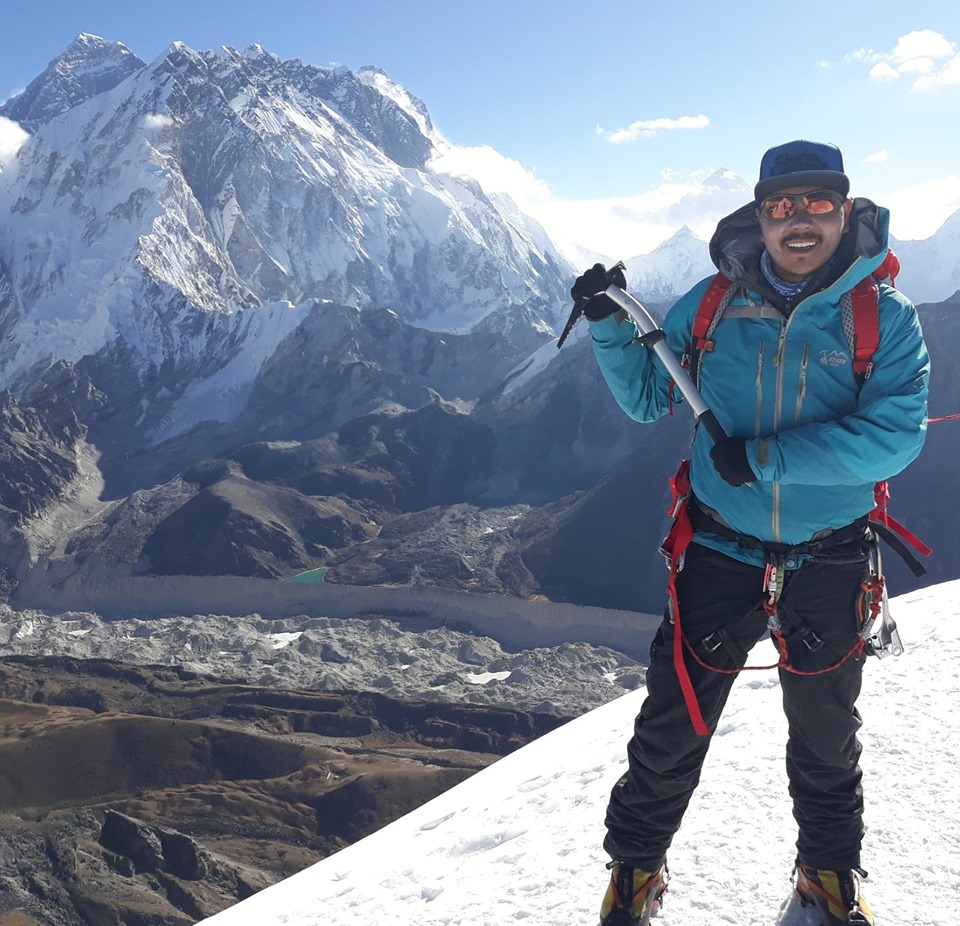
Tackle the technical rock slabs and snowy slopes to reach the summit ridge of Lobuche East. After enjoying the direct view of Everest across the valley, descend back to High Camp and continue down to the village of Pheriche. Meals: B, L, D | Duration: 8-10 hrs | Max Elevation: 6,119m
This day is held in reserve to account for any weather delays or the need for extra rest during the three summit attempts. If unused, it allows for a more relaxed descent. Meals: B, L, D | Max Elevation: Varies
Descend through the wide valley to Pangboche, home to the oldest monastery in the Khumbu. The increase in oxygen and the sight of trees again mark a psychological shift as the high-altitude portion of the trip concludes. Meals: B, L, D | Duration: 4-5 hrs | Max Elevation: 3,930m
Retrace the classic Everest trail through Tengboche, descending steeply to the river before climbing back up to Namche Bazaar. Enjoy the "capital" of the Sherpas with its cafes, shops, and lively atmosphere. Meals: B, L, D | Duration: 5-6 hrs | Max Elevation: 3,440m
The final day on the trail follows a long descent to the Hillary Bridge and a pleasant walk back through Phakding. A final uphill climb leads you into Lukla for a celebratory dinner with your climbing crew. Meals: B, L, D | Duration: 6-7 hrs | Max Elevation: 2,860m
Take an early morning flight from Lukla back to Kathmandu. Upon arrival, you will be transferred to your hotel for a long-awaited hot shower and a full day of relaxation. Meals: B | Max Elevation: 1,350m
This day serves as a buffer for any flight delays from Lukla. If on schedule, it is a perfect day for sightseeing or final souvenir shopping in the city. Meals: B | Max Elevation: 1,350m
A final day at leisure in Kathmandu, followed by a traditional farewell dinner in the evening to celebrate the successful completion of the Three Peaks challenge. Meals: B, D | Max Elevation: 1,350m
Transfer to the airport three hours before your flight to begin your journey home. Meals: Breakfast
Cost
The Cost Includes
- Climbing Permits: Expedition permits for Mera, Island, and Lobuche Peaks, plus National Park and Municipality fees.
- Staff: High-altitude climbing guides (1:2 ratio on summit days), base camp cook, and experienced porters.
- Logistics: Round-trip Lukla flights, 3-star hotel in KTM, teahouse and tented accommodation, and all meals during the trip.
- Safety Equipment: Supplementary oxygen (for emergency), satellite phone, Gamo bag, and comprehensive medical kit.
- Climbing Gear: Group gear including ropes, snow bars, ice screws, and high-altitude tents.
The Cost Excludes
- Personal Equipment: Personal climbing gear (boots, ice axe, crampons, harness) and down sleeping bags.
- Insurance: Travel insurance that specifically covers mountaineering up to 6,500m and helicopter evacuation.
- Nepal Visa: Entry visa fees ($50 for 30 days).
- Tips: Gratuities for climbing guides, kitchen staff, and porters.
- Personal Expenses: Drinks, Wi-Fi, laundry, and hot showers in teahouses.
Check List
The gear listed below is recommended for this kind of trips. We encourage you to get all equipment listed below for the trip and kindly ensure you check and try every equipment. You can also buy or hire the same in Kathmandu as they are available in the many trekking shops from branded to local manufacturers in Kathmandu.
Head gears:
- Sunhat X 1
- Warm hat (should cover head & ear comfortably) X 1
- Buffs X 2
- Sunglasses (High-quality, UV-blocking sunglasses with good all-around protection) X 1
- Headlamp with spare batteries (200-300 lumens output) X 1
Upper Body:
- Thermal or fleece base layer top X 2
- Trekking shirts/t-shirts (Breathable and quick-dry materials) – full sleeve x 2 and short sleeve x 2
- Mid-Layer Jacket X 2 (Lightweight downs are good as well)
- Soft-shell jacket X 1 (Water and Wind Resistant)
- Hardshell jacket with a hood X 1 (Fully waterproof shell jacket, must fit comfortably over mid layers)
- Insulated Down Jacket X 1 (provided by us at request)
Lower Body:
- Thermal or fleece base layer bottom X 2
- Trekking trousers/pants X 3
- Hardshell pants X 1 for climbing days (Non-insulated and waterproof)
- Insulated down pant (optional) X 1
Underwear:
- 4 pairs of synthetic or wool fabrics only
Hand Wear:
- Liner Gloves X 1
- Midweight gloves X 1
- Expedition Down Mittens (Leather Palm) X 1
Foot Wear:
- Waterproof Hiking Boots (Preferably full to protect/support your ankle) X 1
- Double Layer Mountaineering Boot X 1
- Hiking socks X 4 pairs medium to heavy (synthetic and wool)
- Summit socks X 2
- Liner socks X 2
- Gaiter X 1 Pair
- Flip flop or Sneaker (To wear at teahouses and in city)
- Down booties (Optional)
Climbing Gears:
- Helmet
- Ice Axe
- Crampons
- Harness
- Carabiners (2 X Screw Gate and 2 X Snap Gate )
- Belay Device X 1
- Ascender/Jumar (Large Handle)
- Prussik Cord
- Safety Cord (2 m length)
Gears / Personal equipment:
- Daypack 40-45 liters (For both trekking and climbing)
- Duffel bag (provided by us at request)
- Down Sleeping bag (-20 C rated) with compression sack (provided by us at request)
- One litre capacity water bottle X 2 (Nalgene)
- Insulated Cover for Water bottle X 1
- Trekking poles
- Camera with charger or spare batteries
- Personal snacks, comfort foods, energy bars and gels
- A laundry bag to keep the dirty clothes
- Padlock (Optional)
- Earplugs (Recommended for light sleeper)
- Large plastic bags to keep the clothes dry
- Extra clothes to wear in Kathmandu when you come back from trek.
Toiletries and hygiene
- Quick drying towel
- Small face towel
- Toothbrush &Toothpaste
- Face mask
- Water treatment tools
- Soap and Shampoo (Smaller bottle)
- Face and body moisturizer
- Sunscreen SPF50+ and Lip balm SPF 30+
- Hand sanitiser/Antiseptic wipes
- Hygiene products
- Basic first aid kit
Documents:
- Passport with validity of 6 months.
- Credit cards in case of emergencies
- Travel Insurance
- Flight tickets
FAQs
While you don’t need to be a pro, basic knowledge of crampons and rope work is highly recommended. We also provide a pre-climb training session at Khare to refresh your skills.
Lobuche East is generally considered the most technical due to its steep, icy rock slabs, while Mera Peak is the highest but technically the most straightforward.
The success rate is high because the itinerary starts with Mera Peak, providing the best possible acclimatization before moving to the more technical Island and Lobuche peaks.
We carry emergency oxygen and a medical kit on all summit days. However, these are 6,000m peaks, so oxygen is not typically used for the climb itself, only for safety.
It is a mix. You will stay in comfortable teahouses in the lower regions and high-quality, insulated mountain tents at the high camps and during the Amphu Lapcha crossing.